Imagine a world where your office is wherever you have a laptop and an internet connection. Now, imagine a future where that same office can be a virtual conference room on Mars, a collaborative 3D design studio, or a digital twin of your company’s headquarters, all from a headset. The way we work is undergoing a seismic shift, but the path forward is branching into two distinct, powerful directions. Do you embrace the established freedom of remote flexibility, or do you dive into the nascent, immersive world of VR/AR remote work?
This isn’t just a question of tools; it’s a fundamental choice about your career trajectory, work style, and the very nature of your professional interactions. The traditional model of remote work has shattered geographic barriers, offering unparalleled autonomy. Meanwhile, the emergence of Virtual and Augmented Reality promises to rebuild a sense of shared presence, transforming abstract digital collaboration into a tangible, spatial experience. Understanding the nuances, demands, and opportunities of each is crucial for any professional looking to future-proof their career.
📚 Table of Contents

Understanding Traditional Remote Flexibility
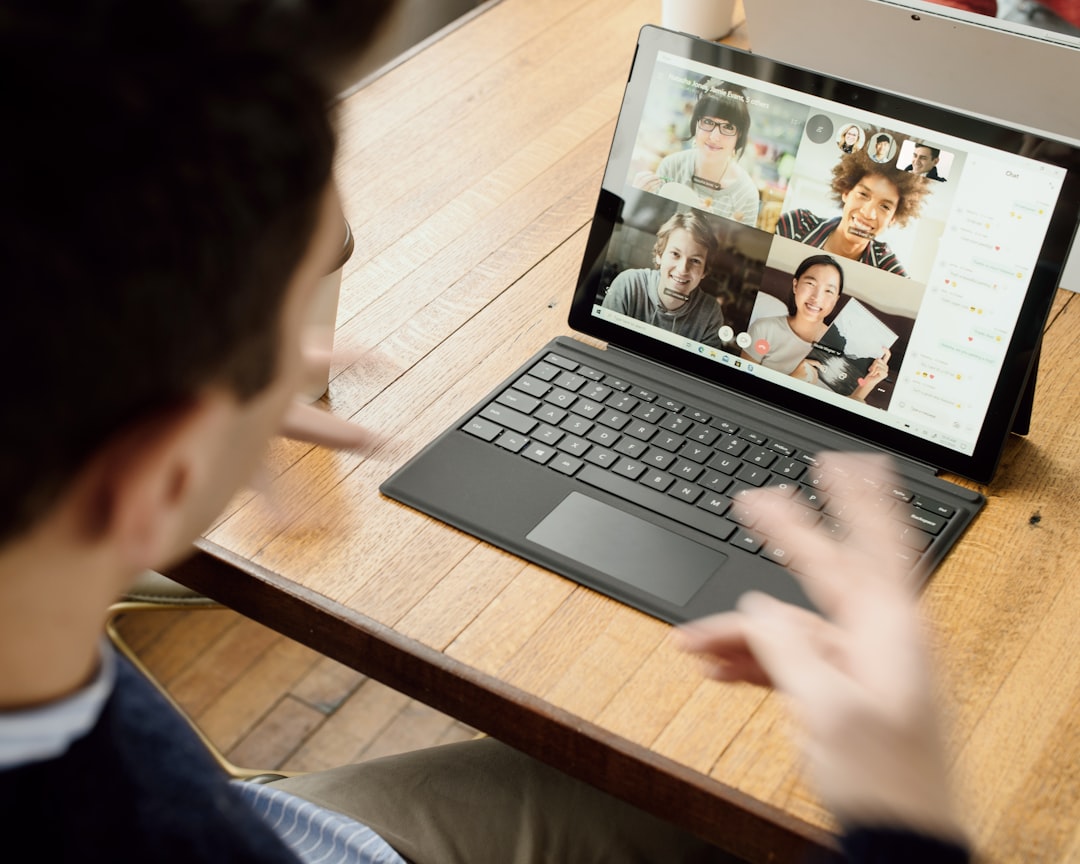
Traditional remote flexibility is the paradigm most people are familiar with today. It’s defined by its core principle: decoupling work from a specific physical location. This model leverages a suite of mature, accessible digital tools—Slack for communication, Zoom for video conferencing, Asana or Trello for project management, and Google Workspace or Microsoft 365 for document collaboration. The primary benefit is autonomy. Employees gain control over their work environment, schedule, and often, their work-life integration. This can lead to increased job satisfaction, reduced commuting stress, and the ability to live anywhere with a reliable internet connection.
However, this model is not without its challenges. The infamous “Zoom fatigue” is a real phenomenon, stemming from the cognitive load of constant video calls and the lack of non-verbal cues found in in-person interaction. Building company culture and fostering spontaneous “water cooler” conversations can be difficult to replicate in a purely 2D digital space. Furthermore, remote work can sometimes lead to feelings of isolation and “out of sight, out of mind” when it comes to career advancement opportunities. The line between work and home life can also blur excessively, leading to burnout if boundaries are not strictly enforced. Careers that thrive in this environment are often in software development, digital marketing, writing, customer support, and many consulting roles—fields where deep, focused work is prized and the deliverables are digital.
The Rise of VR/AR Remote Work
VR/AR remote work represents the bleeding edge of the digital workplace. Instead of simply connecting through screens, this model aims to create a sense of shared presence through immersive technology. Virtual Reality (VR) completely replaces your visual and auditory environment with a simulated one, allowing teams to meet as lifelike avatars in custom-built virtual offices, conduct training in risk-free simulated environments, or prototype products in 3D space. Augmented Reality (AR) overlays digital information onto the real world, enabling a remote expert to guide a local technician through complex repairs by drawing annotations directly into their field of view via smart glasses.
The potential of VR and AR for remote work is staggering. It promises to solve some of the core social and collaborative shortcomings of traditional remote work. Brainstorming sessions can feel more natural when you can gesture, make eye contact with avatars, and interact with 3D models as if they were physically present. The sense of spatial awareness and shared presence can significantly enhance team cohesion and make meetings more engaging and memorable. However, this path is not without significant hurdles. The cost of high-quality hardware remains a barrier for widespread adoption. Issues of accessibility, motion sickness for some users, and the current bulkiness of the equipment are practical concerns. The ecosystem of enterprise-ready VR/AR applications is still developing, and there’s a steep learning curve associated with navigating these new digital frontiers. Careers poised to benefit first from this shift include industrial design, architecture, engineering, medical training, and specialized fields like virtual reality itself.
Key Differences: A Head-to-Head Comparison
To make an informed choice, it’s essential to dissect the core differences between these two models of work.
Technology & Accessibility: Traditional remote work requires a laptop, a stable internet connection, and subscription-based software. It’s a low-barrier-to-entry model that is accessible to millions. In contrast, VR/AR remote work demands a significant investment in hardware—a powerful VR headset like the Meta Quest Pro or Apple Vision Pro, and potentially a high-end computer to run sophisticated applications. This creates a clear divide in terms of accessibility and cost.
Collaboration & Presence: Collaboration in a traditional remote setup is largely transactional and document-centric. You share a screen, you comment on a file, you have a video call. The collaboration happens *around* the work. In a VR/AR environment, collaboration becomes experiential and spatial. You and your colleagues can manipulate a 3D model together, write on a virtual whiteboard that feels real, and experience non-verbal cues through avatar body language. The collaboration happens *inside* the work.
Work-Life Balance & Fatigue: The primary challenge of traditional remote work is unplugging. Your home becomes your office, making it difficult to mentally clock out. The fatigue comes from screen time and context switching. With VR/AR work, the challenge is physical and sensory. Wearing a headset for extended periods can be taxing, and some users experience cybersickness. The act of “leaving the office” is as simple as taking off the headset, creating a potentially clearer physical boundary, but the immersive nature of the work can be mentally draining in a different way.
Career Opportunities & Industry Maturity: The market for traditional remote jobs is vast, mature, and growing across virtually every sector. The career paths are well-defined. The VR/AR remote work landscape is nascent. Opportunities are currently concentrated in tech-forward companies, R&D departments, and the XR industry itself. Choosing this path is often less about finding a “remote job” and more about pioneering a new way of working within a specific, innovative field.
Which Career Path is Right for You?
Your ideal path depends heavily on your personality, career goals, and technical comfort.
Choose Traditional Remote Flexibility if: You are an independent self-starter who values maximum control over your schedule and environment. You excel at written communication and asynchronous collaboration. You are not bothered by the potential for social isolation and are disciplined enough to maintain your own work-life boundaries. Your career field is well-established and doesn’t require intense, real-time 3D collaboration. You prefer a low-friction, accessible tech stack and want the widest possible selection of job opportunities across different industries.
Explore VR/AR Remote Work if: You are a tech early adopter who is excited by emerging technologies. Your work is inherently visual, spatial, or hands-on, such as 3D modeling, complex assembly, or immersive training. You believe that non-verbal communication and a strong sense of team presence are critical to your productivity and creativity. You are comfortable with a higher cost of entry and are willing to troubleshoot new technology. You are aiming for a career in a future-focused industry and want to be at the forefront of the next digital transformation.
The Future: A Convergence of Realities
It is unlikely that one model will completely obliterate the other. The most probable future is a hybrid one, a convergence where professionals fluidly move between modes of work. You might start your day answering emails and writing reports in the traditional flexible mode (laptop on the couch), then don a lightweight AR glasses for a collaborative design review where 3D holograms are projected onto your physical desk, and finally, enter a fully immersive VR environment for a global team-building exercise. The choice between remote flexibility and VR/AR remote work will become less of an “either/or” and more of a “when and how” to use each tool for maximum effectiveness. The key for long-term career success will be digital fluency—the ability to adapt and thrive across this spectrum of virtual and physical workspaces.
Conclusion
The decision between embracing traditional remote flexibility or pioneering VR/AR remote work is a defining one for the modern professional. The former offers proven autonomy and a vast landscape of opportunity, while the latter provides an immersive, collaborative depth that begins to bridge the gap between digital and physical. By carefully weighing the technological requirements, collaborative styles, and personal preferences outlined here, you can strategically choose the path that not only aligns with your current skills but also propels you toward the future you want to build. The world of work is expanding beyond the office walls; the question is, which dimension will you choose to work in?
💡 Click here for new business ideas
Leave a Reply