
📚 Table of Contents
- ✅ Defining the Terrain: Freelance Data Visualization vs. Business Intelligence
- ✅ The Pros of Hiring a Freelance Data Visualization Specialist
- ✅ The Cons of Hiring a Freelance Data Visualization Specialist
- ✅ The Pros of Hiring a Business Intelligence Professional
- ✅ The Cons of Hiring a Business Intelligence Professional
- ✅ Making the Right Choice: A Strategic Decision Matrix
- ✅ Conclusion
In today’s data-driven world, the ability to transform raw numbers into compelling stories and actionable insights is a superpower. But when your organization needs this capability, a critical question arises: should you hire a freelance data visualization expert or bring on a full-time business intelligence professional? This isn’t just a hiring decision; it’s a strategic choice that impacts your budget, project timelines, data culture, and ultimately, your bottom line. Both paths offer distinct advantages and come with their own set of challenges, and understanding the nuanced pros and cons of freelance data visualization versus business intelligence is essential for making an informed decision.
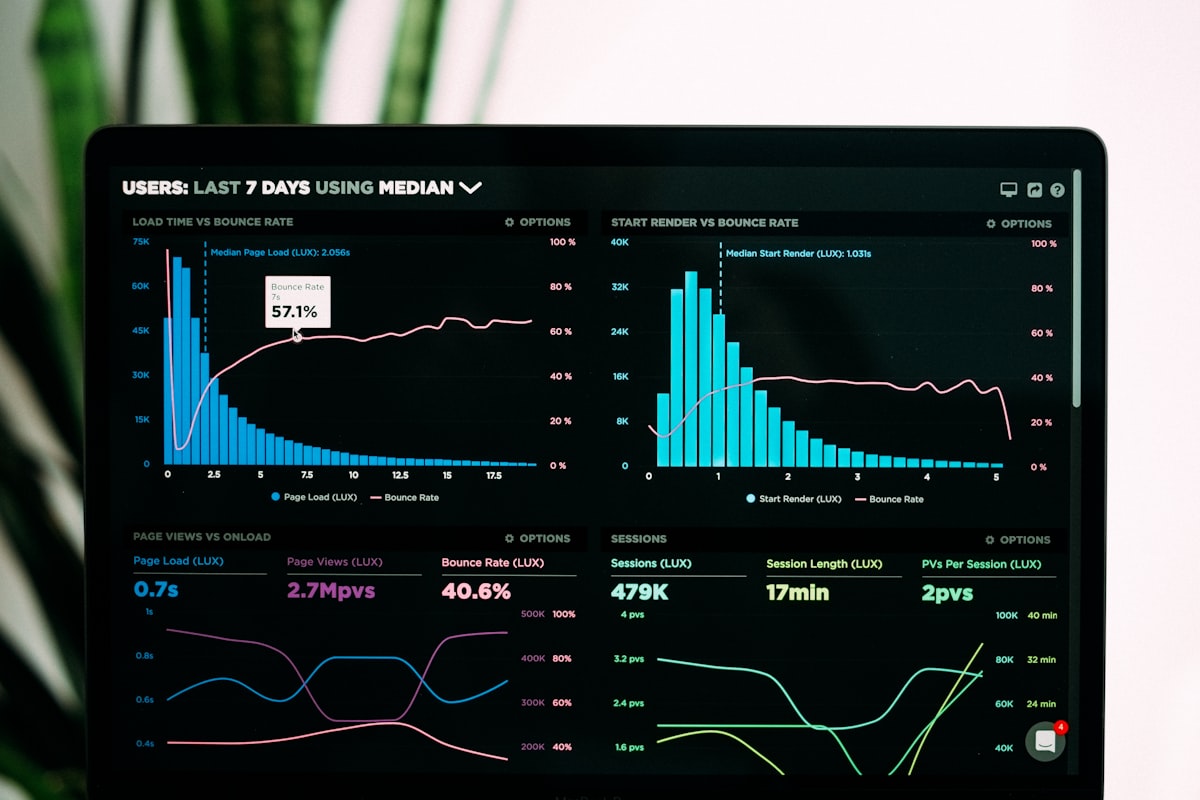
Defining the Terrain: Freelance Data Visualization vs. Business Intelligence
Before diving into the comparison, it’s crucial to clarify the scope of these roles, as they often overlap but have different core focuses. A freelance data visualization specialist is typically a project-based expert whose primary skill is in the art and science of visual communication. They excel at taking a defined dataset and crafting intuitive, aesthetically pleasing, and insightful charts, graphs, and interactive dashboards using tools like Tableau, Power BI, D3.js, or Python libraries (Matplotlib, Seaborn, Plotly). Their deliverable is often the visualization itself—a report, an infographic, or a dashboard that tells a specific story.
A business intelligence (BI) professional, often a full-time employee or long-term contractor, operates on a broader spectrum. BI encompasses the entire data pipeline: from data extraction and warehousing (ETL/ELT) to data modeling, governance, and finally, reporting and visualization. A BI pro doesn’t just make charts; they build the infrastructure that allows for consistent, reliable, and scalable reporting. They work with databases (SQL), data warehouses (like Snowflake or BigQuery), and BI platforms to create a sustainable system for organizational decision-making. Their deliverable is often a governed, company-wide BI ecosystem.
The Pros of Hiring a Freelance Data Visualization Specialist
Choosing a freelance data visualization expert brings a host of compelling benefits, particularly for specific project needs and organizations with limited internal bandwidth.
1. Specialized Expertise and Creative Flair: Freelancers often niche down deeply. You can hire a world-class expert in Tableau storytelling, a D3.js wizard for custom web-based interactives, or a specialist in geographic data mapping. This gives you access to cutting-edge design trends and technical skills that might be too specialized to justify in a full-time role. For a high-stakes presentation, investor report, or public-facing infographic, this creative edge is invaluable.
2. Cost-Effectiveness for Discrete Projects: For one-off projects or initiatives with a clear beginning and end, hiring a freelancer is typically far more budget-friendly. You avoid the long-term financial commitments of a salary, benefits, bonuses, and overhead costs. You pay for the deliverable and the hours worked, making it easier to manage cash flow and project budgets.
3. Flexibility and Scalability: The freelance model offers immense flexibility. You can scale your data visualization capacity up or down based on current needs without going through lengthy hiring or layoff processes. Need a dashboard built in two weeks? A skilled freelancer can dive in immediately. Once the project is done, the engagement concludes cleanly.
4. Fresh Perspective and Objectivity: An external freelancer brings an unbiased, outside view of your data. They aren’t embedded in company politics or preconceived narratives. This objectivity allows them to spot patterns, ask naive but crucial questions, and tell the data’s story without internal filters, potentially leading to breakthrough insights.
5. Speed of Onboarding for Specific Tasks: If your data is already clean, structured, and ready for visualization, a freelancer can start producing almost immediately. Their onboarding is focused on understanding the data context and your visual requirements, not your company’s entire IT infrastructure.
The Cons of Hiring a Freelance Data Visualization Specialist
Despite the advantages, the freelance route has significant limitations, especially for ongoing or foundational data needs.
1. Lack of Institutional Knowledge and Context: A freelancer’s outsider status is a double-edged sword. They may lack deep understanding of your industry nuances, business processes, or historical data quirks. This can lead to misinterpretations or visualizations that are technically correct but strategically misaligned, requiring multiple revision cycles and careful management.
2> Limited Scope: The “Last Mile” Focus: Freelance data visualization experts typically excel at the “last mile”—the presentation layer. They often assume (or require) that the data is already cleaned, modeled, and prepared. If your data is messy, scattered across multiple sources, or requires complex transformation, you’ll either need to do that work internally first or hire additional (and often separate) data engineering expertise, complicating the project.
3. Knowledge Drain and Lack of Continuity: Once the freelancer delivers the dashboard or report and their contract ends, they walk away with all the tacit knowledge about why certain design choices were made, how the calculations work, and how to update the visuals. If you need to modify or maintain the asset later, you’re dependent on their availability or must reverse-engineer their work, which is risky and inefficient.
4. Potential Security and Governance Risks: Sharing sensitive company data with an external party always carries inherent risk. You must have robust contracts covering data confidentiality, ownership of deliverables, and secure data transfer methods. Ensuring compliance with regulations like GDPR or HIPAA becomes more complex with freelancers.
5. Management Overhead: Hiring and managing freelancers is a project in itself. It requires time for sourcing, vetting, contracting, briefing, and providing feedback. Miscommunications are common, and without a dedicated internal project manager, scope creep and timeline delays can occur.
The Pros of Hiring a Business Intelligence Professional
Investing in a business intelligence professional, whether as a full-time employee or a dedicated long-term contractor, builds a foundational capability for your organization.
1. End-to-End Ownership and Strategic Alignment: A BI professional owns the entire data value chain. They can work with stakeholders to define KPIs, design the data architecture to capture them, build ETL pipelines to consolidate data, create a semantic data model for consistency, and then produce the reports. This holistic approach ensures that visualizations are rooted in a single source of truth and directly tied to business strategy.
2. Building a Sustainable Data Culture: A BI pro doesn’t just deliver reports; they enable self-service analytics. They build governed, user-friendly data models in tools like Power BI or Looker so that non-technical business users can safely explore data and create their own basic reports. This democratizes data, reduces the reporting bottleneck, and fosters a truly data-driven culture.
3. Deep Institutional Knowledge and Trust: As a long-term team member, the BI professional accumulates deep knowledge of your business, its data sources, and its quirks. They become a trusted advisor who understands not just what the data shows, but what it *means* for your specific context. This leads to more accurate, relevant, and actionable insights over time.
4. Proactive Insight and System Maintenance: Instead of reacting to requests, a dedicated BI professional can proactively monitor data trends, identify anomalies, and suggest new analytical avenues. They are also responsible for maintaining the BI infrastructure—ensuring data refreshes run smoothly, performance is optimized, and systems are updated—which is critical for reliability.
5. Enhanced Data Governance and Security: Having an internal expert ensures that data access, security protocols, and compliance requirements are managed consistently within the organization’s control framework. They implement row-level security, audit logs, and proper data lineage tracking, which is much harder to enforce with a rotating cast of freelancers.
The Cons of Hiring a Business Intelligence Professional
The comprehensive benefits of a BI professional come with substantial commitments and potential drawbacks.
1. Higher Long-Term Cost: This is the most apparent con. The total cost of employment—including salary, benefits, taxes, software licenses, and training—is significantly higher than the project fee for a freelancer. For small businesses or startups, this can be a prohibitive investment.
2. Longer Time-to-Value: Building a robust BI infrastructure takes time. Before any beautiful dashboards appear, weeks or months may be spent on data engineering, modeling, and testing. The initial return on investment is slower compared to a freelancer who can produce a visual in days.
3. Risk of “Ivory Tower” Analytics: If not properly integrated with business teams, a BI professional can become isolated, building complex data models and reports that don’t address the most pressing business questions. This requires strong stakeholder management skills from the BI pro and active engagement from leadership.
4. Potential for Skill Gaps: The field of BI is vast. One individual may be an excellent data modeler but a mediocre visual designer, or a SQL expert but unfamiliar with advanced statistical analysis. While freelancers offer hyper-specialization, a single BI hire might not cover all the advanced visualization or data science needs that arise.
5. Organizational Dependency: Your BI processes and knowledge become concentrated in one or a few individuals. This creates a key-person risk. If they leave the company, it can disrupt reporting and leave a significant knowledge gap that is difficult and time-consuming to fill.
Making the Right Choice: A Strategic Decision Matrix
The decision between freelance data visualization and a business intelligence professional isn’t binary; it’s about matching the solution to your specific situation. Use this matrix as a guide:
Choose a Freelance Data Visualization Specialist when:
- You have a clearly defined, one-time project (e.g., an annual report, a sales deck for a big pitch, a marketing campaign analysis).
- Your data is already clean, integrated, and ready for visualization.
- You need highly specialized or artistic design that goes beyond standard BI tool capabilities.
- You have limited budget for ongoing data work but can allocate funds for a specific deliverable.
- You have internal staff to manage the freelancer and maintain the deliverable afterward.
Choose a Business Intelligence Professional when:
- You need to build a scalable, reliable data infrastructure for the long term.
- Your data is siloed, messy, and requires constant transformation and modeling.
- Your goal is to democratize data access and enable self-service analytics across departments.
- You have ongoing, evolving reporting needs and require a dedicated owner for data governance.
- You can make a substantial and sustained investment in both the role and the supporting technology stack.
A powerful hybrid approach is also emerging: hiring a core internal BI professional to build and govern the data foundation, and then strategically engaging freelance data visualization experts for special projects that require exceptional design or novel interactive features. This combines stability with creative firepower.
Conclusion
The debate between leveraging freelance data visualization talent and investing in a business intelligence professional ultimately hinges on the maturity of your data journey and the strategic outcome you seek. Freelancers offer agility, specialized skill, and cost control for tactical, well-scoped projects where data is prepped and the need is primarily communicative. In contrast, a BI professional is a strategic investment in building a data-centric organization from the ground up, ensuring that insights are consistent, governed, and woven into the fabric of daily decision-making. By carefully weighing the pros and cons of each path against your organization’s specific needs, resources, and long-term vision, you can make the choice that not only illuminates your data but also empowers your entire business to move forward with clarity and confidence.
Leave a Reply