
📚 Table of Contents
- ✅ Mainstream Financial Institution Adoption
- ✅ The Real Estate Revolution
- ✅ Global Regulatory Clarity and Frameworks
- ✅ The Interoperability Imperative
- ✅ The DeFi and TradFi Convergence
- ✅ Fractional Ownership of Everything
- ✅ Tokenized Bonds and Debt Instruments
- ✅ AI and Asset Tokenization Symbiosis
- ✅ ESG and Impact Investing Tokenization
- ✅ NFTs Beyond Art: Utility and Asset-Backed NFTs
- ✅ Central Bank Digital Currencies (CBDCs) as a Catalyst
- ✅ Enhanced Privacy with Zero-Knowledge Proofs
- ✅ Advanced Oracles for Real-World Data
- ✅ Specialized Tokenization Platforms and SaaS
- ✅ Cross-Border Trade and Settlement
- ✅ Conclusion
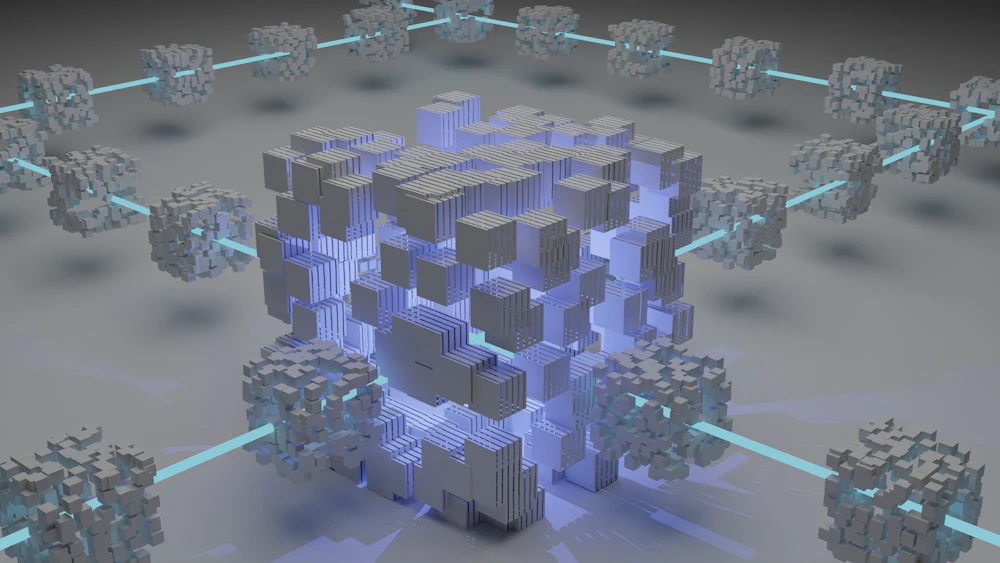
Imagine a world where a piece of a rare vintage car, a fraction of a Picasso painting, or a share in a commercial skyscraper in another continent can be bought and sold as easily as a share of a publicly traded company. This is not a distant future; it’s the rapidly approaching reality being built on the backbone of asset tokenization. As we look towards 2025, the evolution of this technology is set to accelerate, moving from niche experiments to core components of the global financial infrastructure. What are the key asset tokenization trends that will define this transformative period and reshape how we perceive and interact with value?
Mainstream Financial Institution Adoption
The era of skepticism is over. In 2025, we will witness a massive wave of adoption from the world’s most established financial institutions. Major banks, asset managers, and private equity firms are no longer just exploring tokenization; they are actively building and integrating it into their core service offerings. This trend is driven by an urgent need to remain competitive, reduce operational costs, and unlock new revenue streams. We are moving beyond proof-of-concepts to live, production-grade platforms. For instance, a global bank like J.P. Morgan is already executing complex transactions on its Onyx platform, tokenizing traditional assets for intraday repo transactions. In 2025, expect to see these institutions offering tokenized versions of their funds, enabling clients to invest in private equity or hedge funds with lower minimums and greater liquidity. The narrative will shift from “if” to “how” and “which assets first,” as tokenization becomes a standard feature in the wealth management and institutional investment toolbox.
The Real Estate Revolution
Real estate, traditionally one of the most illiquid and inaccessible asset classes, is poised for a profound transformation through asset tokenization. The trend in 2025 will be characterized by the tokenization of not just individual properties but entire portfolios and development projects. Imagine a $500 million commercial real estate portfolio being broken down into 50 million tokens, each worth $10. This allows a retail investor in Tokyo to own a piece of a prime office building in New York, receiving automated dividend payments in the form of rental income directly to their digital wallet. The benefits are immense: fractional ownership drastically lowers the barrier to entry, while blockchain-based smart contracts automate leasing, maintenance fee collection, and distribution of profits, reducing administrative overhead and potential for error. Platforms like RealT are already pioneering this space, and by 2025, we will see major real estate investment trusts (REITs) and developers adopting this model to attract a new, global investor base.
Global Regulatory Clarity and Frameworks
The single greatest catalyst for asset tokenization in 2025 will be the maturation of global regulatory frameworks. Jurisdictions like the European Union with its MiCA (Markets in Crypto-Assets) regulation, Hong Kong with its progressive virtual asset licensing regime, and the UAE are creating clear rules of the road. This clarity provides the legal certainty that institutional capital requires. Regulators are moving from a stance of observation to active participation, defining what constitutes a security token, outlining custody requirements, and establishing anti-money laundering (AML) and know-your-customer (KYC) standards for tokenized assets. This trend will lead to the emergence of “regulated DeFi” or “institutional DeFi” platforms, where only permissioned, verified participants can trade tokenized securities in a compliant manner. The focus will be on ensuring investor protection without stifling innovation, creating a safe environment for trillions of dollars of assets to transition onto blockchain rails.
The Interoperability Imperative
As the number of tokenization platforms and blockchain networks multiplies, a critical challenge emerges: how do these isolated systems communicate? The trend for 2025 will be a intense focus on interoperability. The vision of a seamless global market for tokenized assets cannot be realized if a token on a private Corda network cannot be traded or used as collateral on a public Ethereum-based DeFi protocol. Projects and consortia will prioritize cross-chain communication protocols and standards. Technologies like Cosmos’s IBC (Inter-Blockchain Communication) and Polkadot’s parachains will become increasingly important. Furthermore, we will see the rise of universal token standards that can function across multiple environments, and the development of interoperable digital identity solutions that allow a user’s credentials to be recognized and verified across different platforms, simplifying compliance and user experience.
The DeFi and TradFi Convergence
The line between decentralized finance (DeFi) and traditional finance (TradFi) will continue to blur in 2025, creating a powerful synergy. TradFi brings trusted, high-quality assets and regulatory compliance, while DeFi brings unparalleled composability, programmability, and 24/7 global liquidity. The trend will be the tokenization of real-world assets (RWAs) specifically for use within the DeFi ecosystem. For example, a tokenized U.S. Treasury bond can be used as collateral to borrow stablecoins in a DeFi lending protocol. This provides the bond holder with liquidity without having to sell the underlying asset, while the lender earns a yield backed by a highly secure instrument. Major asset managers like BlackRock tokenizing money market funds on public blockchains is a clear signal of this convergence. In 2025, we will see a vast array of tokenized TradFi assets—bonds, equities, commodities—becoming foundational components of the DeFi lending and borrowing landscape.
Fractional Ownership of Everything
Asset tokenization is set to democratize ownership in an unprecedented way, moving far beyond financial securities. The trend of fractionalizing high-value, alternative assets will explode in 2025. This includes fine art, vintage wines, rare collectibles (sports memorabilia, classic cars), intellectual property rights, and even royalties from music catalogs or film projects. Platforms will emerge that specialize in the valuation, custody, and tokenization of these unique assets. An artist could tokenize their future royalty stream, selling a percentage to fans and investors to fund their next project. A museum could tokenize a masterpiece, allowing the public to become co-owners and share in its potential appreciation. This trend unlocks trillions of dollars in currently dormant capital, creating vibrant, liquid markets for assets that were previously only available to the ultra-wealthy or highly specialized funds.
Tokenized Bonds and Debt Instruments
The debt market, one of the largest asset classes in the world, is ripe for disruption. In 2025, we will see a significant increase in the issuance of tokenized bonds by corporations, municipalities, and even national governments. The advantages are too compelling to ignore. Tokenization can streamline the entire bond lifecycle—from issuance and settlement to coupon payments and redemption—using smart contracts. This reduces the need for intermediaries, lowers costs, and speeds up settlement from T+2 to near-instant (T+0). The European Investment Bank has already issued digital bonds on blockchain platforms. In 2025, we can expect smaller governments to use tokenized bonds to attract a broader investor base for infrastructure projects, and corporations to issue bonds with more dynamic features, such as variable interest rates that are automatically adjusted based on predefined, on-chain data oracles.
AI and Asset Tokenization Symbiosis
Artificial Intelligence and asset tokenization will form a powerful symbiotic relationship in 2025. AI will be leveraged to enhance nearly every aspect of the tokenization lifecycle. Machine learning algorithms will be used for the initial valuation of complex assets like intellectual property or private company shares, analyzing vast datasets to determine a fair market price for tokenization. AI-powered smart contracts could become more adaptive, automatically adjusting terms based on real-world performance data fed by oracles. Furthermore, AI will play a crucial role in compliance and risk management, continuously monitoring transactions across decentralized networks for suspicious patterns to ensure regulatory adherence. On the flip side, tokenization will provide AI models with access to vast, structured, and high-quality datasets on asset performance and ownership, which can be used to train more accurate predictive models for investment and risk assessment.
ESG and Impact Investing Tokenization
As Environmental, Social, and Governance (ESG) investing continues its meteoric rise, tokenization offers a powerful tool to bring transparency and accountability to this space. The trend in 2025 will be the tokenization of green bonds, carbon credits, and impact investment projects. Each token can be programmed as a smart contract that is intrinsically tied to verifiable, on-chain data. For instance, a token representing a carbon credit could be automatically retired upon use, preventing double-spending and fraud. A token funding a solar farm project could automatically distribute dividends based on real-time energy production data fed by IoT sensors. This creates an immutable and auditable trail of impact, allowing investors to see exactly how their capital is being used and what environmental or social benefits are being generated, thereby building greater trust and driving more capital towards sustainable projects.
NFTs Beyond Art: Utility and Asset-Backed NFTs
The narrative around Non-Fungible Tokens (NFTs) is evolving from speculative digital art to functional, utility-driven tokens that represent ownership of real-world assets. In 2025, we will see the rise of asset-backed NFTs. An NFT could represent the title deed to a physical property, the ownership certificate for a luxury watch held in a secured vault, or a share in a rare diamond. These are not just JPEGs; they are legally enforceable claims on a physical item. The utility aspect will also grow, with NFTs serving as access keys to exclusive events, membership clubs, or software licenses. This trend merges the unique, verifiable nature of NFTs with the tangible value of real-world assets, creating a new class of hybrid digital-physical property rights that are easily transferable and tradable on global markets.
Central Bank Digital Currencies (CBDCs) as a Catalyst
The potential launch and widespread testing of Central Bank Digital Currencies (CBDCs) around the world will act as a significant catalyst for asset tokenization in 2025. A CBDC provides a native, digital form of central bank money that is perfectly suited for settling tokenized asset transactions. It enables what is known as “atomic settlement” – the simultaneous exchange of the asset token and the payment token (the CBDC) in a single, irreversible transaction. This eliminates counterparty risk and drastically reduces settlement times. Imagine buying a tokenized stock and having the stock and the payment settle on the same ledger in seconds, 24/7. As countries like China, India, and those in the Eurozone advance their CBDC projects, they will create the ideal monetary plumbing for a thriving tokenized asset ecosystem, encouraging further innovation and adoption.
Enhanced Privacy with Zero-Knowledge Proofs
One of the perceived hurdles for institutional adoption of public blockchains has been the lack of transaction privacy. In 2025, this barrier will be overcome through the widespread implementation of Zero-Knowledge Proofs (ZKPs) and other privacy-enhancing technologies. ZKPs allow one party to prove to another that a statement is true without revealing any information beyond the validity of the statement itself. In the context of asset tokenization, this means an institution can prove it is compliant with regulations (e.g., it has performed KYC) without exposing sensitive client data on a public ledger. It can also conceal transaction amounts and counterparties while still allowing for public auditability of the network’s overall state. This technology will be crucial for bringing confidential corporate actions, sensitive trading strategies, and private equity transactions onto more transparent and efficient blockchain networks.
Advanced Oracles for Real-World Data
The reliability and security of smart contracts for tokenized assets are entirely dependent on the quality of the data they receive. This makes oracle networks—services that feed external data onto the blockchain—a critical piece of infrastructure. The trend in 2025 will be the development of more sophisticated, decentralized, and high-assurance oracles. These will go beyond providing simple price feeds to delivering verified data on real-world events: legal court rulings, corporate earnings reports, weather data for insurance contracts, or IoT sensor readings for supply chain assets. The focus will be on creating oracle systems with robust cryptographic proofs and economic security to prevent data manipulation, ensuring that the trillion-dollar smart contract economy for tokenized assets is built on a foundation of trust and accuracy.
Specialized Tokenization Platforms and SaaS
As the market matures, we will see a move away from generic tokenization solutions towards highly specialized platforms and Software-as-a-Service (SaaS) offerings. These platforms will cater to specific industries, providing tailored workflows, legal templates, and compliance tools. For example, a platform might specialize exclusively in tokenizing private equity funds, with built-in features for managing capital calls, distributions, and investor accreditation. Another might focus on the art world, offering integrated services for provenance verification, insurance, and physical storage. This trend lowers the technical and legal barrier to entry for businesses, allowing a gallery, a fund manager, or a manufacturing company to tokenize their assets through a user-friendly interface without needing to become blockchain experts themselves.
Cross-Border Trade and Settlement
Asset tokenization is inherently global, and one of its most powerful applications is in streamlining cross-border trade and finance. In 2025, we will see a significant increase in the use of tokenized letters of credit, trade invoices, and supply chain assets. By representing these instruments as tokens on a shared ledger, all parties—exporter, importer, shipper, and banks—can have a single, immutable source of truth. This reduces paperwork, minimizes fraud, and accelerates the entire process. A tokenized letter of credit can be programmed to automatically release payment to the exporter once the shipping company’s IoT sensors confirm the goods have been loaded onto the vessel. This trend will make international trade faster, cheaper, and more accessible for small and medium-sized enterprises, unlocking global economic growth.
Conclusion
The year 2025 is shaping up to be a pivotal moment for asset tokenization. The convergence of regulatory maturity, institutional participation, and technological advancement is creating a perfect storm for mainstream adoption. The trends outlined here—from the fractionalization of every asset class to the deep integration with AI and CBDCs—paint a picture of a financial system that is more efficient, inclusive, and transparent. While challenges around standardization and scalability remain, the momentum is undeniable. Asset tokenization is not merely a technological upgrade; it is a fundamental re-architecting of how we define, own, and transfer value, and its impact will be felt across every corner of the global economy.
💡 Click here for new business ideas
Leave a Reply